
Policy Objective | Recognise that a healthy natural environment is the foundation upon which all human wellbeing and prosperity is built, and so prioritise environmental sustainability to better protect, manage and restore Australia's fragile and unique natural environment.
In short:
Recognise that a healthy natural environment is the foundation upon which all human wellbeing and prosperity is built
- Enshrine into Australian law the fundamental human right of a healthy natural environment
- Significantly reduce Australia's waste production
- Act on climate change and contribute to staying below 1.5 degrees global temperature rise compared to pre-industrial levels
Related policies
- Animals & Biodiversity
- Energy
- Finite & Non-Renewable Resources
- Health
- Indigenous / Aboriginal & Torres Strait Islander Australians
- Job Guarantee
- Planning & Development
- Science
- Population & Immigration (Australia)
- Regional Australia
- Trade
- Transport
- Waste
- Water
Policies Sections
- General
- Climate Change
- Forestry
Policy Objective
Recognise that a healthy natural environment is the foundation upon which all human wellbeing and prosperity is built, and so prioritise environmental sustainability to better protect, manage and restore Australia's fragile and unique natural environment.
Policy Actions (Federal & State)
To support this objective, Sustainable Australia Party will:
General
- Enshrine into Australian law the fundamental human right of a healthy natural environment for its citizens and prioritise this in all policy and development decisions
“Australia is one of only 15 nations (a list that also includes Canada and the United States) that does not recognise the human right to a healthy environment at the federal level.” The Conversation
- Establish an independent National Sustainability Commission to plan and report on national environmental standards, as well as better balance economic development with environmental protection
- Establish a federal Environment Protection Agency to act as independent environmental watchdog, with powers to apply the ‘precautionary principle’(1) to projects and developments where there is a serious environmental risk
- Properly resource all government departments to address the environmental management and monitoring aspects of multidisciplinary projects
- Operate Australia’s economy within the principles of 'ecological economics' (also see Economy policy)
- Significantly reduce Australia's waste production, and increase its recycling and energy recovery through a circular economy (also see Waste policy)
- Widespread urban, rural, marine and waterway animal habitat protection, including avoiding habitats of all threatened, vulnerable and endangered native species in housing, mining, agriculture, forestry, energy, etc developments (also see Animals & Biodiversity policy)
- Recognise that industries such as renewable energy and electric motor vehicles also have major environmental impacts and do not provide a solution to techno-fix business-as-usual economic (consumption) growth
- Establish a national 'job guarantee' program, initially focusing on the environment (also see Job Guarantee policy)
- Invest more in environmental education and the protection, maintenance and ecological restoration of the natural environment
- End broadscale land clearing and initiate a nationwide ecological restoration and rewilding program to rehabilitate degraded lands
- Properly include the traditional knowledge of Aboriginal and Torres Strait Islander Australians’ in environmental research and decision-making
- Protect Australia from invasive species by adopting the Invasive Species Council’s six-point action plan
- Recognise that human impact (I) on the environment is a function of three factors: population (P), affluence (A) (also known as consumption per person) and technology (T), being the ‘IPAT’ formula
- Slow population growth then stabilise Australia’s population size as soon as practicable (also see Population & immigration policy)
"But population growth, combined with an increase in consumption, is now seen as the main driver of change in the Earth system." The Conversation
- Assist farmers to transition to scientifically verified regenerative agriculture practices (also see Regional Australia policies)
- Encourage food and drink choices that benefit the environment, including plant-based options
Climate change
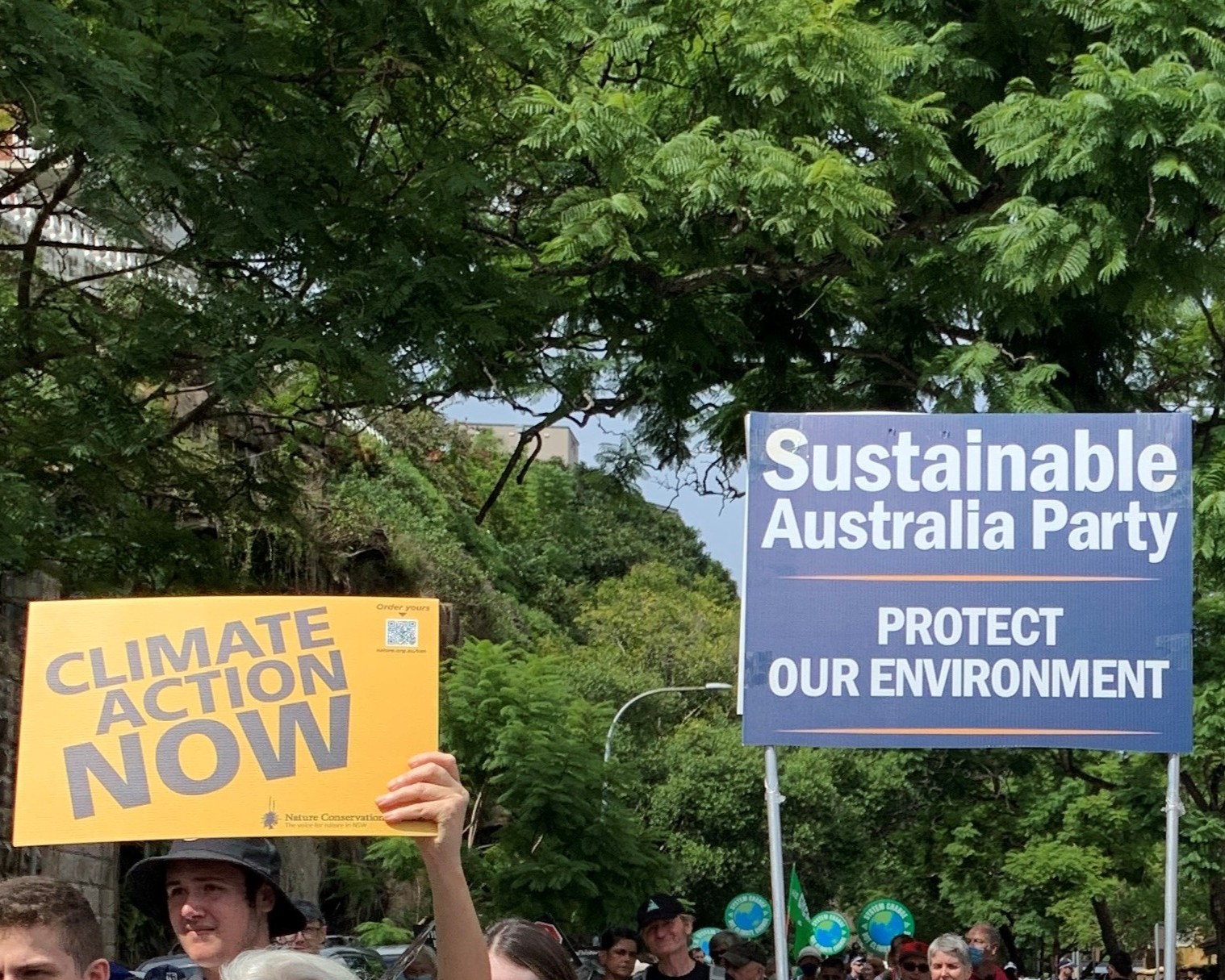
"The viability of our societies depends on leaders from government, business and civil society uniting behind policies, actions and investments that will limit temperature rise to 1.5 degrees Celsius." Australian Broadcasting Corporation
"The world’s leading climate scientists have warned that the prospect of limiting global warming to 1.5C will be out of reach within 12 years at current rates of greenhouse gas emissions, in a report that finds it is now “unequivocal’’ that human activity is heating the planet." The Australian [$]
Background - Climate change policies
SAP understands that as a global community we are losing the fight against climate change; the Australian government has the wrong policies; and Australia acting alone is pointless and counter-productive.
- Act on climate change and contribute globally to staying below 1.5 degrees global temperature rise compared to pre-industrial levels (2)
- Support international agreements to lower greenhouse gas emissions including a target of net zero emissions by 2035, ensuring that all high emitting countries meet the same or similar climate goals
- Reduce emissions by at least 75 per cent below 2005 levels by 2030, ensuring that all high emitting countries meet the same or similar climate goals
-
Recognise that to achieve these ambitious targets and make them economically fair and environmentally meaningful, Australia must:
- Act to slow population growth then stabilise Australia’s population size (and related resource consumption) as soon as practicable (also see below)
- Work to urgently achieve a new global agreement that ensures all high emitting countries including economic competitors like China, USA and India meet the same or similar climate goals (also see Trade policy)
- Adopt a globally consistent carbon pricing mechanism that does not unfairly penalise Australian industries against their equivalent foreign competitor
- Place tariffs or bans on imports where any relevant carbon pollution has not been priced into the goods and services
- Slow population growth then stabilise Australia’s population size as soon as practicable (also see Population & Immigration policy)(3)
"The federal government’s State of the Environment 2016 report (prepared by a group of independent experts) predicts that population growth and economic development will be the main drivers of environmental problems such as land-use change, habitat destruction, invasive species, and climate change." The Conversation
“Population growth had cancelled out three quarters of the global efforts to reduce carbon emissions in recent years." PM
The greatest impact individuals can have in fighting climate change is to have one fewer child..." The Guardian
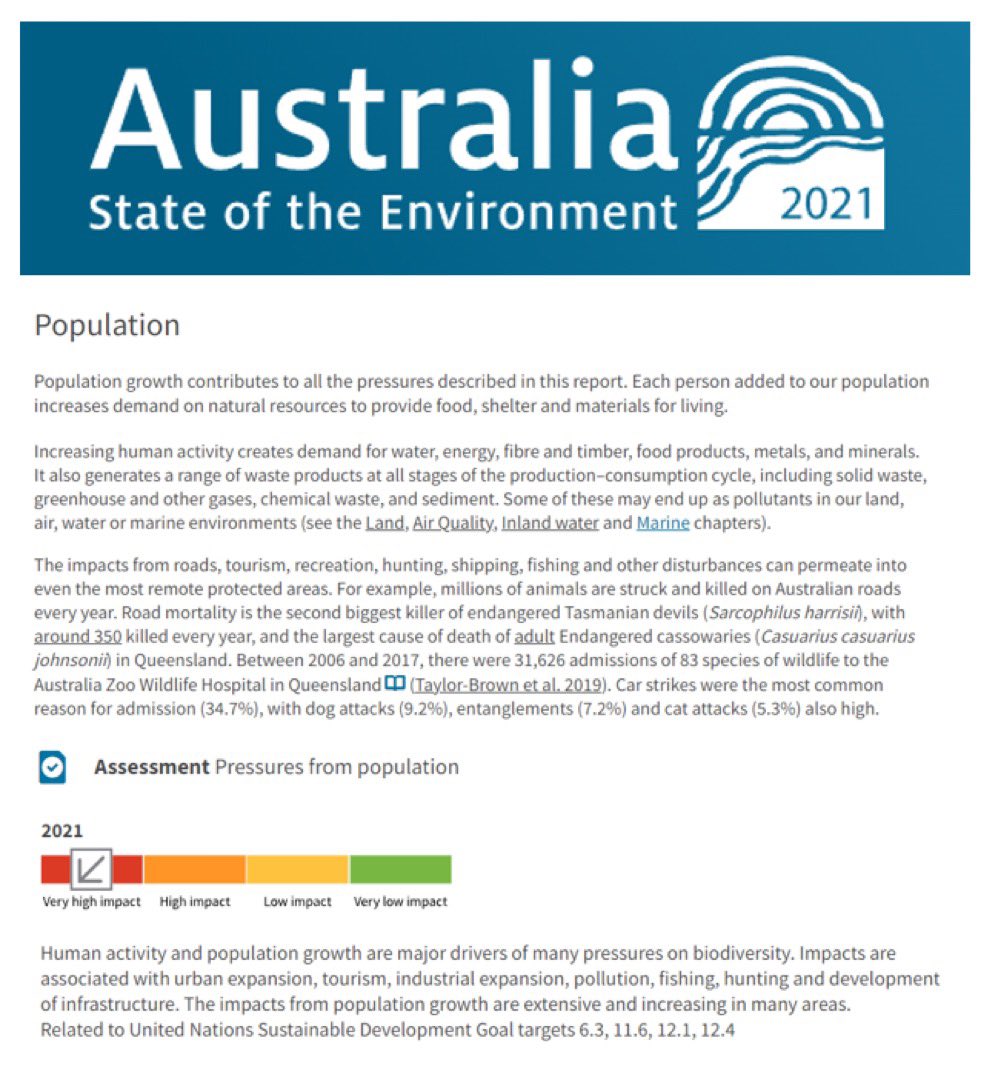
"Population growth contributes to all the pressures described in this report. Each person added to our population increases demand on natural resources to provide food, shelter and materials for living." State of the Environment Report 2021
The Victorian Government's Victorian Greenhouse Gas Emissions Report 2018, is further shocking evidence (unreported in the mainstream media) of how government-engineered rapid population growth is wiping out our efforts to reduce per capita (and therefore total) emissions.
- Fund and subsidise research and development into renewable energy technologies and energy efficiency initiatives
- Adopt a renewable energy target (RET) in line with our commitment on zero net emissions
- Implement a ban on all new coal mines in Australia
- Impose a moratorium on all new fracking, including for coal seam gas (also see Energy policy)
- Phase out fossil fuel subsidies
Forestry
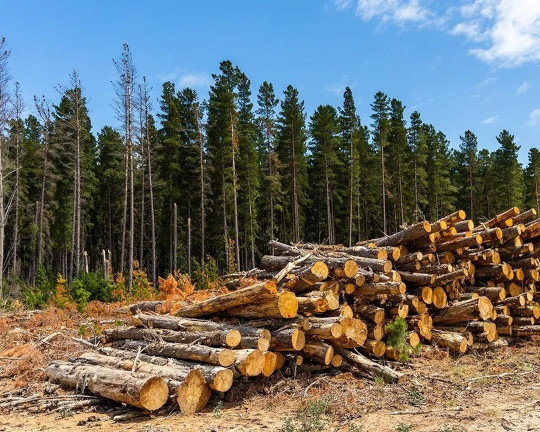
- Manage Australia’s native forests so they increase in both quantity and quality
- Support a diverse range of plantation products, while recognising that plantations (monocultures) can and do cause serious environmental problems
- Restore failed plantations back to native forest
- Subject all state Regional Forest Agreements to the jurisdiction of the Environment Protection and Biodiversity Conservation Act 1999 (EPBC Act) to ensure all forestry is subject to appropriate environmental and planning approval requirements
- End all old growth forest logging (4)
- Impose a moratorium on all native forest logging given the huge loss of Australia’s native forests over the past 250 years, while we conduct a full national scientific enquiry into logging in Australia. This would answer the question of whether native forest logging is sustainable under the following strictly managed practices and scale:
- Avoiding habitats of all threatened, vulnerable and endangered native species
- Banning the export of raw materials (e.g. woodchips)
- Increasing the forest reserve system
- Operate on long rotations, ideally at least 100 years
- Maximising the Australian economic value-add for timber products
- Preventing Australian native forests and its waste from being burnt for biomass power as a ’renewable energy‘ source under any Renewable Energy Target or related scheme (this would be achieved through non-accreditation of such practises).
- Assist farmers and rural landowners, where practicable, to engage in agroforestry
Footnotes:
- The precautionary principle enables decision-makers to adopt precautionary measures when scientific evidence about an environmental or human health hazard is uncertain and the stakes are high.
- Sustainable Australia Party supports the science that humans are contributing to climate change. To this end, our Australian greenhouse gas emissions reduction targets are adopted from recommendations by the Climate Council.
- Population growth undermines efforts to lower carbon emissions: Click here and here. Further reading re population growth: The Green case for controlling our borders - Ecologist. Closing the sustainability loop - Sustainable Australia Party founder William Bourke.
- Old growth forest is forest that is ecologically mature (usually at least 100-200 years old) and has been subjected to negligible unnatural disturbance.